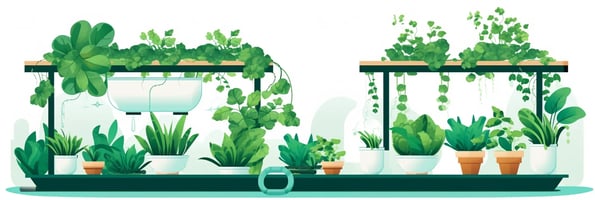
Hydroponics 101: Your Comprehensive Guide to Soil-less Gardening
You know what's tough? Digging. Sweat on your brow, dirt under your nails, back aching like you've been wrestling a gorilla. You know what's tougher? Realizing after all that hard work, your
plants are still sulking like teenagers asked to do the dishes. Why, you ask? Well, it could be that your soil is about as nutritious as a fast-food cheeseburger. For all your efforts, you might've been better off planting your tomatoes in a tub of ice cream.
But what if I told you there's a way to garden that doesn't involve soil at all? No digging, no lugging bags of compost, no soil tests. Welcome, my green-thumbed friends, to the world of
hydroponics.
What is Hydroponics, Anyway?
Hydroponics, from the Greek "hydro" (
water) and "ponos" (work), is essentially about making
water do all the heavy lifting. It's a method of gardening where you grow
plants without soil, using mineral nutrient solutions in
water instead. It's like making your
plants a protein shake, giving them exactly what they need, when they need it.
You might be thinking, "But
plants need soil, right?" Well, it's a common misconception. Soil is just the messenger, delivering nutrients to the roots. With
hydroponics, we cut out the middleman and bring the nutrients directly to the roots. It's like using email instead of sending a letter by post.
The Perks of Going Soil-less
Now, why would anyone want to ditch good old Mother Earth for a bunch of nutrient-infused
water? Well, let me tell you,
hydroponics has some serious perks.
First off,
hydroponics can be incredibly space-efficient. You can grow a whole lot more in a smaller area than you could with traditional soil gardening. Imagine being able to grow a garden in your tiny apartment balcony, or even inside your home. It's like having a Tardis: looks small on the outside, but step inside and it's a whole different story.
Second,
hydroponics can be more productive. Because you're delivering nutrients directly to the roots,
plants can grow faster and yield more. It's the equivalent of your
plants being on a constant caffeine buzz, working overtime.
Lastly,
hydroponics can be easier on the environment. It uses less
water, less space, and since there's no soil, there's no soil-borne diseases or pests. It's like a VIP club, no unwelcome guests allowed.
Setting Up Your Hydroponic System
So you're ready to dive into
hydroponics. But where do you start? Well, there are a few types of hydroponic systems you can choose from.
The simplest one is the wick system. Picture a plant with a drinking straw, sipping nutrients from a
reservoir below. That's your wick system. It's like a self-watering pot on steroids.
Then there's the
water culture system, where the
plants are floating directly on the nutrient solution. It's like they're chilling in a hot tub, sipping cocktails.
Lastly, we have the drip system and the ebb and flow system. The drip system is like an IV drip, delivering nutrients directly to the roots. The ebb and flow system floods the roots with nutrients, then drains it back, like a beach's tide coming in and going out.
Giving Your Hydroponic Garden Some TLC
Now that you've set up your hydroponic system, you might think you can sit back, relax, and watch your
plants grow. Well, not quite. Like any garden, a hydroponic system needs some TLC.
You'll need to keep an eye on the pH levels in your nutrient solution. If the pH is too high or too low, your
plants might start acting like picky eaters, refusing to take in certain nutrients. It's like trying to feed a toddler – it has to be just right.
You'll also need to watch out for pests and diseases. Sure, you've cut out soil-borne problems, but that doesn't mean you're totally in the clear. It's like moving from a neighbourhood with a high burglary rate to one with a low rate – you still lock your doors, right?
And of course, you need to monitor the nutrient levels in your solution. Too little and your
plants will be malnourished. Too much and they might experience nutrient burn. It's a delicate balancing act, like juggling flaming torches.
Wrapping It Up
So there you have it, folks, your comprehensive guide to soil-less gardening.
Hydroponics might sound high-tech and complicated, but it's really just about giving your
plants a direct line to the nutrients they need.
So why not give it a try? Ditch the shovel, say goodbye to the dirt, and step into the future of gardening. Who knows, you might just find that
hydroponics is your new favorite way to grow.