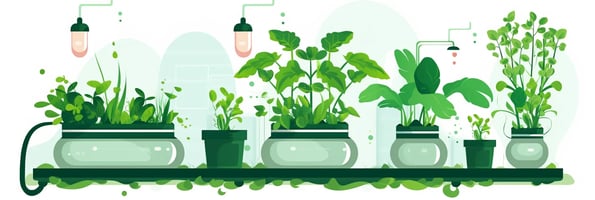
The Ultimate Guide to Hydroponics: Everything You Need to Know for Growing Plants at Home
Hello, green-thumbed friends! Are you tired of getting your hands dirty? Fed up with the constant battle with pesky weeds? Or maybe you're just running out of space in your garden. Well, do I have a solution for you!
Hydroponics. No, it's not a new genre of electronic music, it's a fantastic way of growing
plants at home without soil! Intrigued? Well, let's dive in.
What is Hydroponics?
"
Hydroponics", sounds like some sort of science experiment, right? Well, you're not entirely wrong.
Hydroponics is a method of growing
plants, but instead of using soil, we use mineral nutrient solutions in
water. Yes, you heard right! No soil. At all.
The Benefits of Hydroponics
Now, you might be thinking, "Why on earth would I want to grow
plants without soil? What's wrong with good old-fashioned dirt?" Well, dear reader, there are numerous advantages to this soil-less wonderland.
- Space-Saving: With hydroponics, you don't need a sprawling backyard or a fancy greenhouse. You can set up a hydroponic system in the smallest of apartments. And let's be honest, as much as we love our plants, they can be a bit of a space-hogger.
- Water Efficient: Hydroponics uses up to 90% less water than traditional soil gardening. Yes, you read it right, 90%! So you can grow your plants and save the planet at the same time. Talk about multitasking.
- Faster Growth: Plants grown hydroponically grow 30-50% faster than their soil-grown counterparts. So, if you're as impatient as I am, this is a big win.
The Basics of Setting Up Your Own Hydroponic System
Now, before you get all excited and start filling your bathtub with nutrient solution, let's talk about the nitty-gritty of setting up your hydroponic system.
Step 1: Choose Your System
There are several types of hydroponic systems, each with its own advantages and disadvantages. We've got the Wick system (no, not John Wick), the
Water Culture, the Ebb and Flow (also known as flood and drain, for those who like their instructions clear and unambiguous), the Drip system, the NFT, and the Aeroponic. It's like a buffet of
water-based plant growing. Do your research and choose the one that suits your needs and space best.
Step 2: Get Your Supplies
Once you've chosen your system, it's time to gather your supplies. You'll need a
reservoir, a growth chamber, a submersible pump, a timer, an air pump, air stones, tubing, growth medium, nutrients, and
plants or seeds. Sounds like a lot, I know, but don't worry, it's not as complicated as it sounds and you'll be the proud parent of hydroponically grown
plants in no time!
Step 3: Set It Up
Now comes the fun part, setting it all up. This process will vary depending on the type of system you've chosen, so I won't dive into the details. Just remember, the goal is to create a system that delivers nutrient-filled
water to your
plants. Just imagine yourself as the postman, but for
plants.
Step 4: Maintain Your System
Once your system is set up and your
plants are happily growing, you'll need to maintain your system. This includes checking the pH levels, changing the nutrient solution, and monitoring the health of your
plants. But hey, at least you won't be weeding!
So there you have it folks, your ultimate guide to
hydroponics. Now go forth and grow your soil-less garden! And remember, in the immortal words of Bob Marley, "Don't worry about a thing, 'cause every little thing gonna be alright." Especially if you're growing hydroponically.