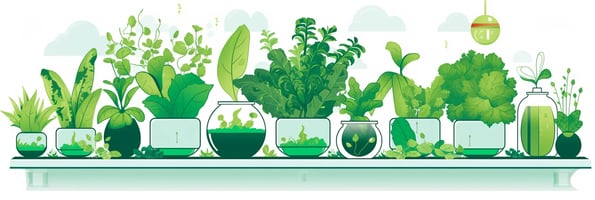
Ultimate Guide to Hydroponics: Top Questions Answered for Beginners and Experts
Hello there! Let's spill the tea on
hydroponics today, shall we?
Whether you are a newbie in the gardening world - yes, the one who accidentally killed a cactus, or the full-fledged green thumb, there's always something new to learn. Today, we throw the spotlight on
hydroponics. After this guide, you will be the sought-after hydroponic guru in your friend circle. Ready? Let's dive in.
What is this hydroponics you speak of?
Good question, grasshopper.
Hydroponics, in layman's terms, is a method of growing
plants without soil. Wait, what?
Plants without soil? Yes, you heard right! We're living in the 21st century, my dear friend, where things like this are not just possible, but they're actually thriving.
Why should I care about hydroponics?
Why should you care? Hmm...let me think...maybe because you can grow unlimited basil for your homemade pizza without turning your backyard into a jungle? Or maybe because it's sustainable, uses less
water, and can be done indoors. What about the ability to grow fresh produce in the middle of the city, away from any farm? Yeah, I thought that might grab your attention.
Does it involve a lot of tech stuff?
Ah, the dreaded tech question. Well, let's put it this way - if you can operate a smartphone and Google how to take care of a dog (or a child!), you can do
hydroponics. It's that simple.
What plants can I grow with hydroponics?
You'd be surprised at what you can grow with
hydroponics. From leafy greens like spinach and lettuce, to herbs like basil and mint, to tomatoes and cucumbers,
hydroponics has got you covered. Just think about it - fresh, juicy strawberries in the dead of winter, all thanks to your indoor
hydroponics system. Now that's a win!
What are the types of hydroponic systems?
You have options, my friend! There are six major types of hydroponic systems, namely: the Wick system, Deep
Water Culture (DWC), Nutrient Film Technique (NFT), Ebb and Flow (Flood and Drain), Aeroponics, and Drip systems. Each has its nuances, advantages and disadvantages. Like life, it's all about finding what works best for you (and your
plants, of course).
Doesn't it cost a fortune?
You could think that. But just like you don't need a Ferrari to get from point A to point B, you don't need a state-of-the-art
hydroponics system to grow your greens. You can start small and inexpensive, then upgrade as you learn and grow.
Hydroponics is a skill, not a bank-breaking hobby.
What about nutrients?
Plants need food too, you know! In traditional soil gardening,
plants get their nutrients from the soil. But in
hydroponics,
you have to feed them. This is done by adding nutrient solutions to the
water in the
hydroponics system. It sounds complicated, but it's like making a cocktail - you just need the right recipe!
Can I do it commercially?
Can you? Absolutely! Should you? That's a totally different question. Commercial
hydroponics requires a lot more knowledge, time, and investment. But who knows, you might be running a successful urban farm in a couple of years, providing fresh, local produce to your community. How cool would that be?
Conclusion
So, there you have it - your ultimate guide to
hydroponics. The next time someone asks you about
hydroponics, you can now impress them with your knowledge. And remember,
hydroponics is not just about growing
plants. It's about embracing a more sustainable, resourceful way of living that’s good for you and the planet. So, ready to give it a whirl?